
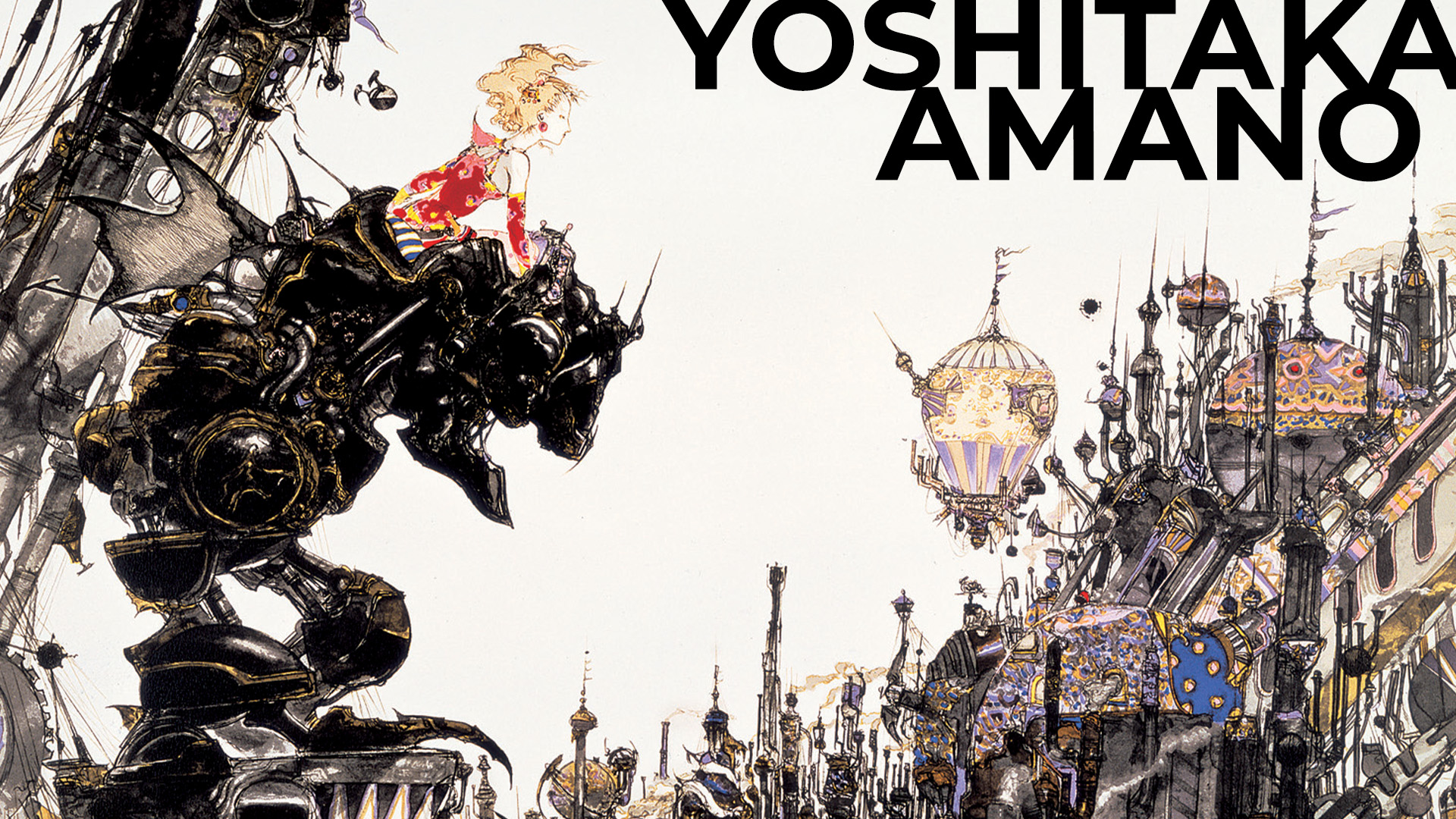
Yoshitaka Amano’s Amano Corpus Animae Exhibition
As the Final Fantasy franchise has established itself as a cornerstone franchise of the video game industry, its pioneering contributors have also amassed immense fame and popularity. It is not surprising that, like many others in the West, my love of historic franchise is how I first came to know the name of the artist Yoshitaka Amano. Even before I actually played my first Final Fantasy title, as a 90s kid who played video games, the image of the Final Fantasy VII logo with its flaming meteor became indelibly etched into my imagination. I hadn’t fully discovered the vast world of Amano’s art that was hiding behind the corner, but it revealed itself to me, bit by bit, the more I played and the more I observed. Almost thirty years later, when I learned that “Amano Corpus Animae,” the largest ever European monographic exhibition devoted to Yoshitaka Amano, was going to take place in my home country of Italy, I knew I had to go.
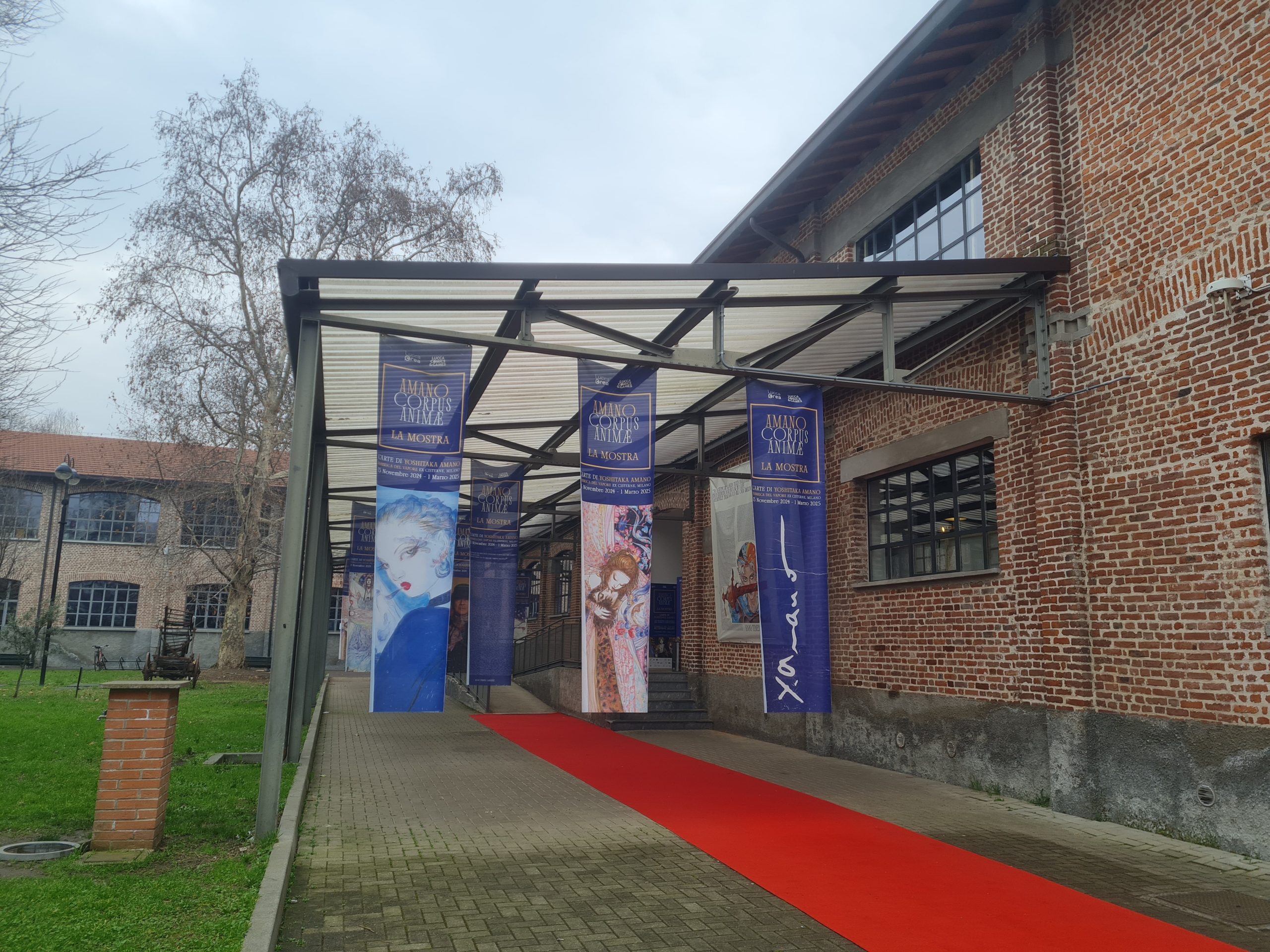
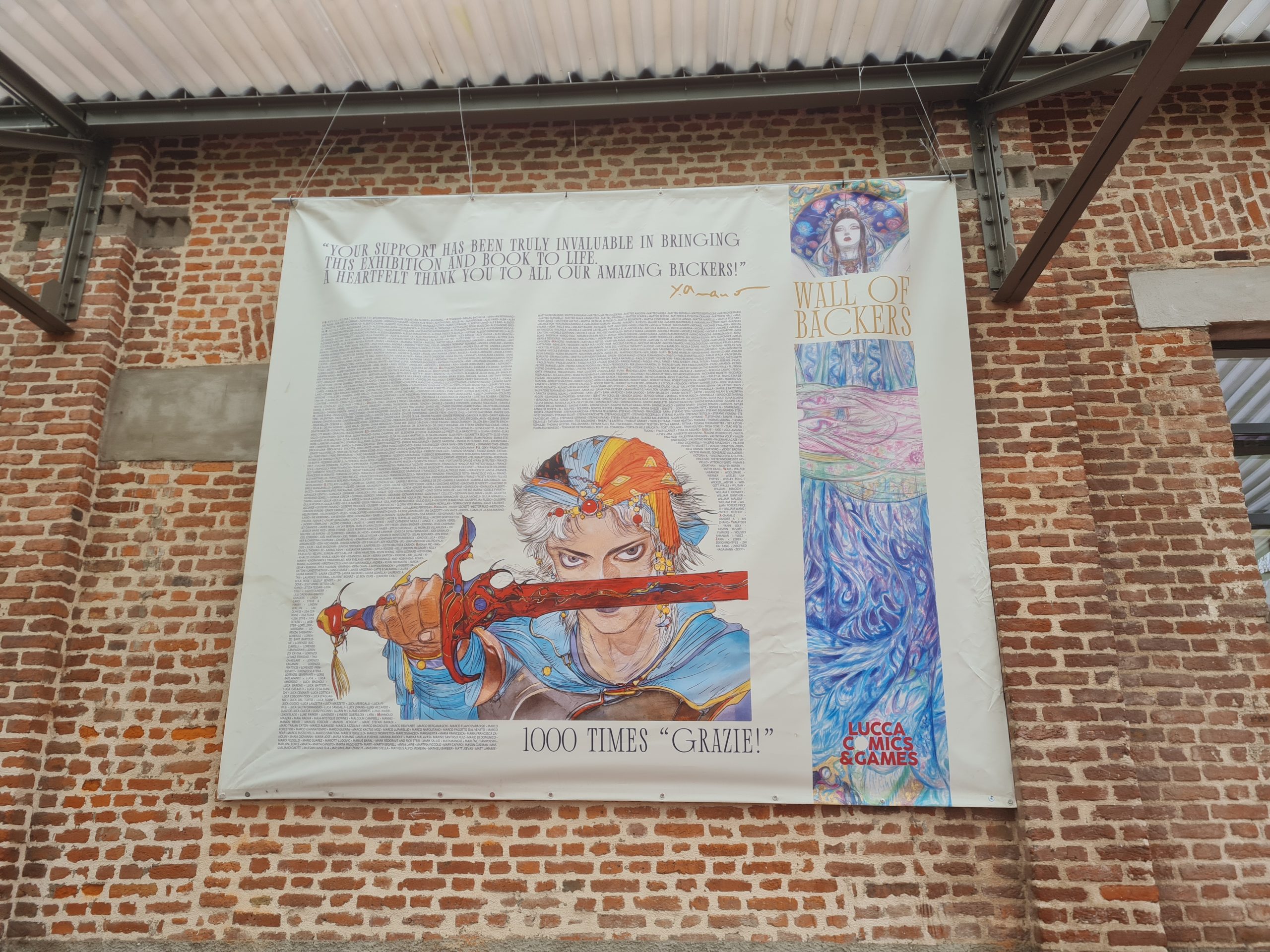
Taking place at the Fabbrica del Vapore in Milan, a converted industrial area that serves as a cultural center and friendly meeting spot, the comprehensive exhibition follows Amano’s career from his start as a very young employee at an animation studio to his most recent works. Structurally, it was divided into five sections, with the first two organized chronologically and the remaining three being organised thematically.
How it All Began: the Tatsunoko Era
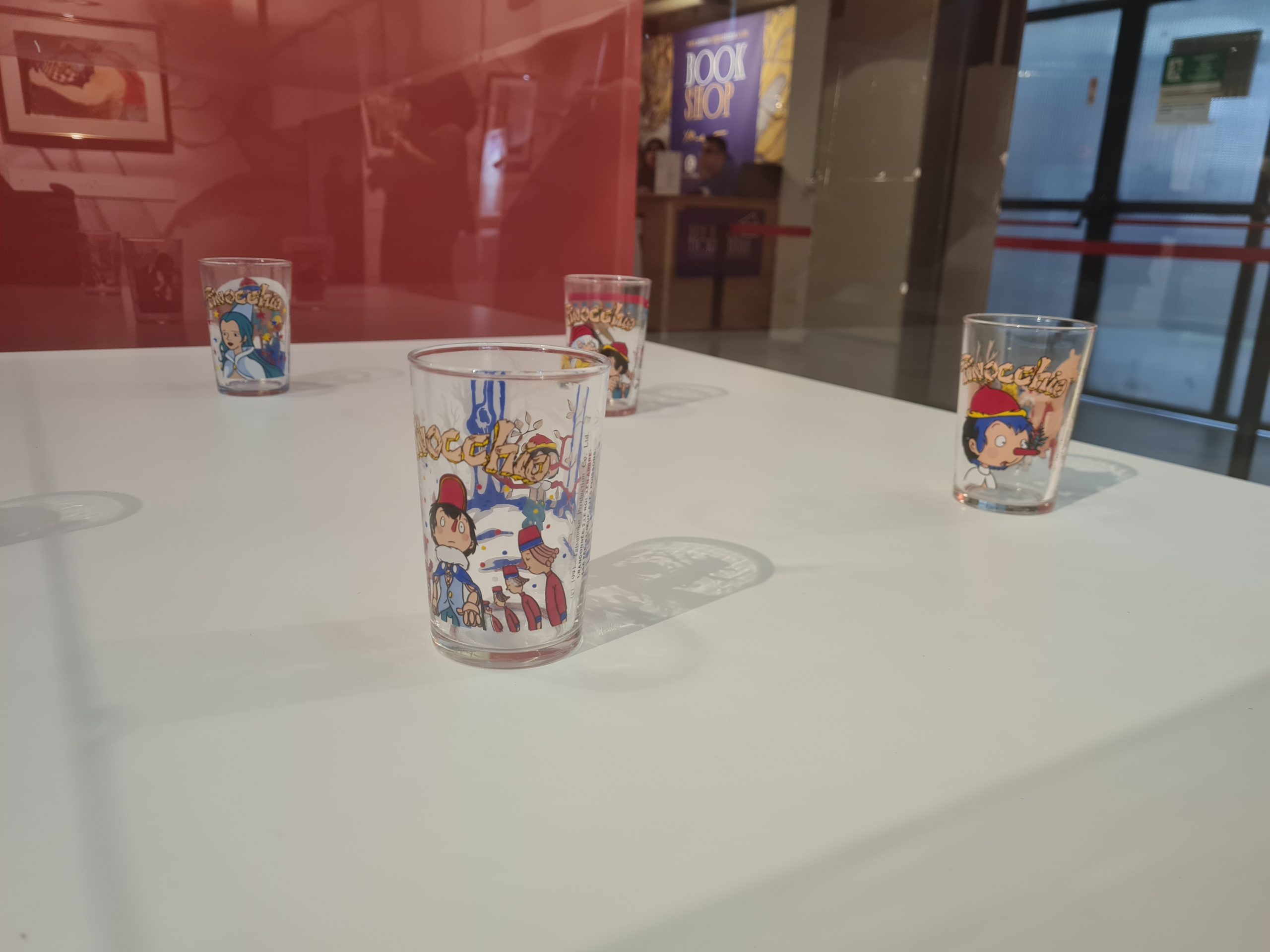
Upon entering the exhibition, I passed through a reproduction of a noren, a traditional Japanese curtain used to divide space, to access the hall hosting the first section, “The Boy from Shizuoka.” Here visitors are introduced to a young Amano starting his career at the animation studio Tatsunoko, where he takes part in designing characters for famous animated series such as Gatchaman, Tekkaman, and Pinocchio.
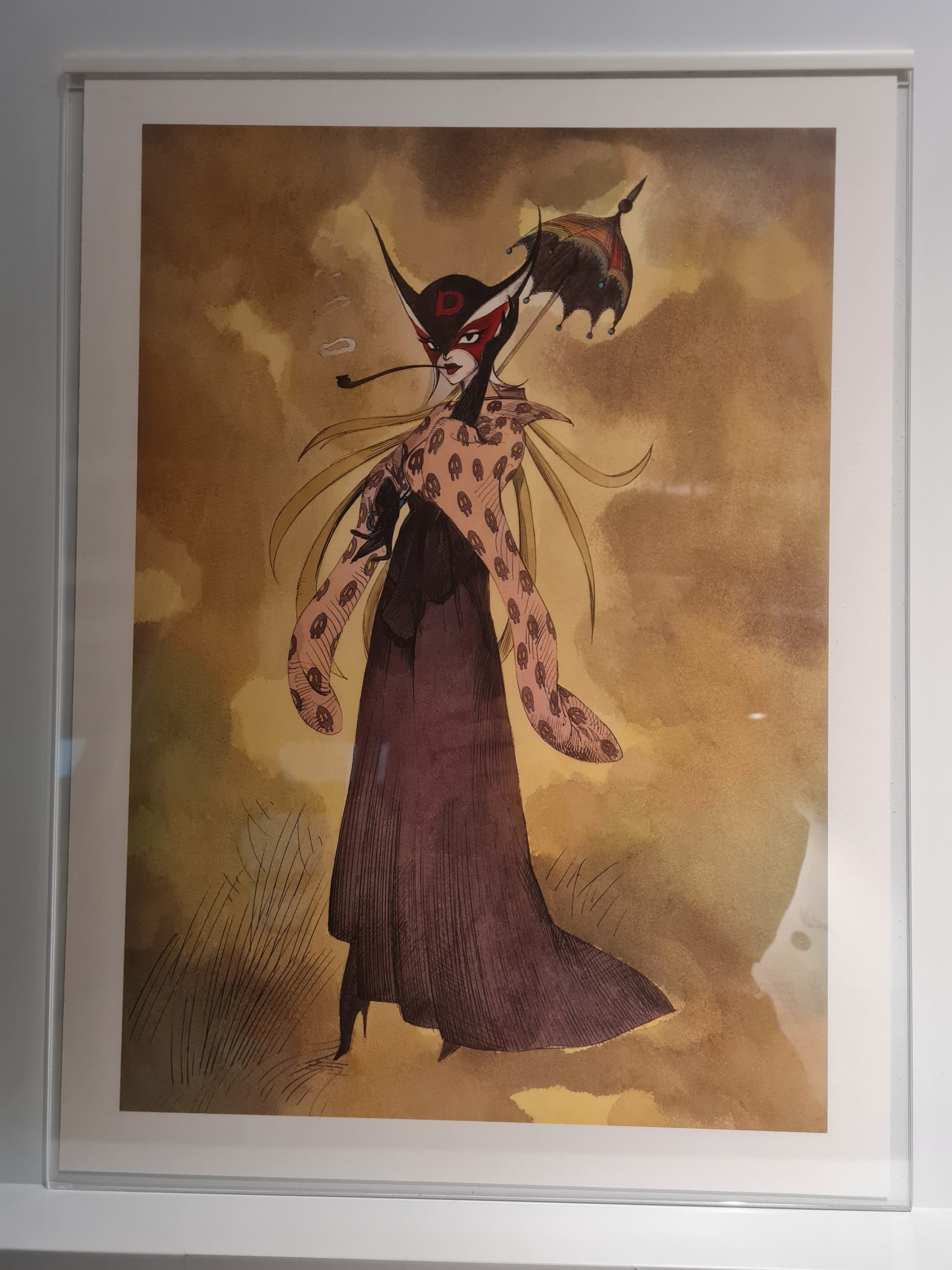
On a tatami-covered platform and hidden behind noren printed with black and white images of a young Amano are nostalgic characters displayed in all their glory through fine art prints and original animation cels. All the while, the familiar opening tune of the animated series Yatterman rings cheerfully in the background. Visitors are invited to watch for a few moments and take their time before moving upstairs to the second floor of the exhibition.
Yoshitaka Amano’s Art Technique and Flying Solo: Freelancer Beginnings
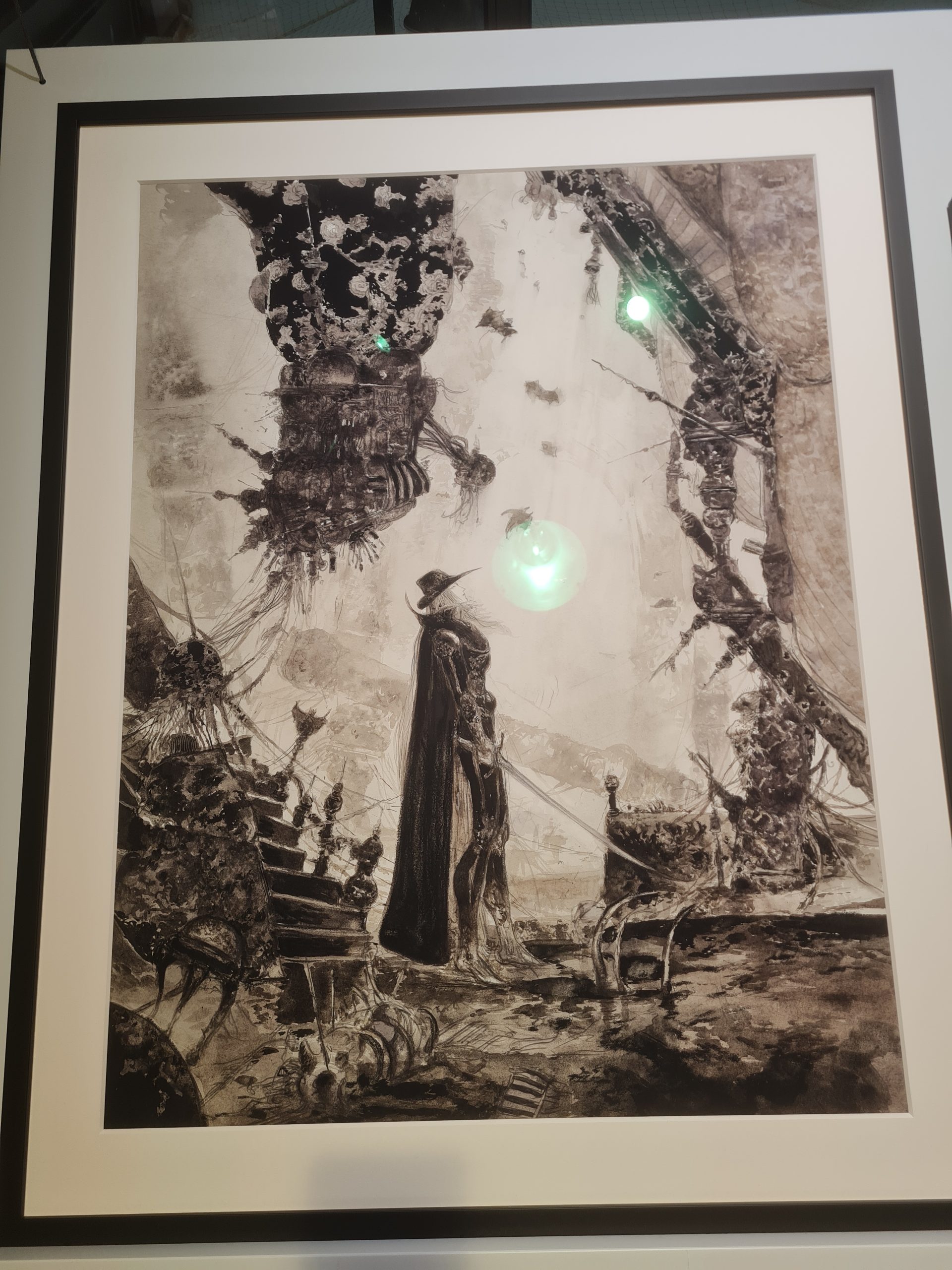
As implied by its title, “At the Origins of the Myth” follows the artist’s blooming freelance career in the early ‘80s, displaying steampunk-ish book covers and illustrations full of old-fashioned clocks and futuristic machines. Hosted here are two famous titles from this period: a short clip of Angel’s Egg, an original video animation (OVA) created in collaboration with Ghost in the Shell’s director Mamoru Oshii, and beautiful artworks of the novel series Vampire Hunter D, written by Hideyuki Kikuchi and illustrated by Amano. Both works share a love for the oneiric, presenting isolated landscapes and mysterious figures. These works also establish the traditional features of Amano’s art techniques — long limbs and fingers, pale faces, and detailed, flowing hair — that have been so clearly embedded in his work and in the minds of his fans.
Familiar Faces: Pop meets Fashion in Classic Yoshitaka Amano Mediums
From here, the exhibition stops following a strictly chronological order and instead presents three different thematic sections. The first of these sections, “Icons,” examines the intersection between Amano’s work and Western pop culture. Visitors are guided through several of his most celebrated collaborations, including Vogue Italia’s first ever illustrated cover and covers of popular American comics like Batman, Batgirl, Superman, Harley Quinn, Elektra, and Wolverine.
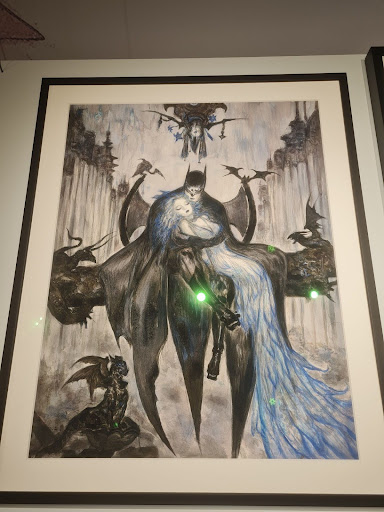
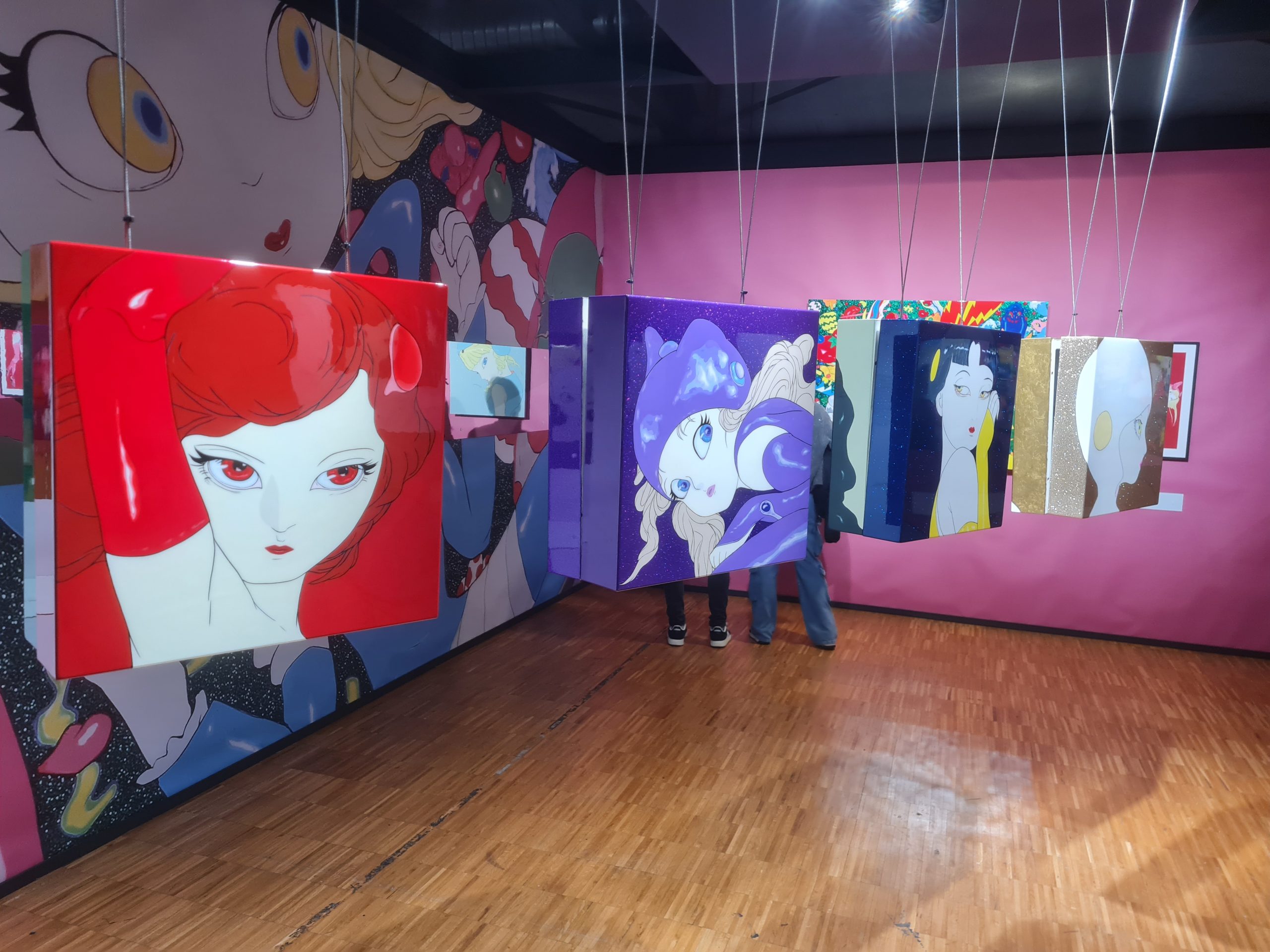
Rounding out this section is a small open space with three curtained alcoves concealing artworks like gems inside treasure chests. Visitors are then invited to pass through a doorway into the Candy Girl series, a world of bright pop colors that made me feel like I was in a candy store made of wide eyes and metallic car paint, a medium that Amano has used since his formative years as an artist. It’s striking how well Amano’s esoteric style combines and fits with such modern symbols, wonderfully representing everything from luxury fashion brands to American superheroes, to movie posters and pop-art-inspired teenage girls.
Gaming Worlds: Final Fantasy and Beyond
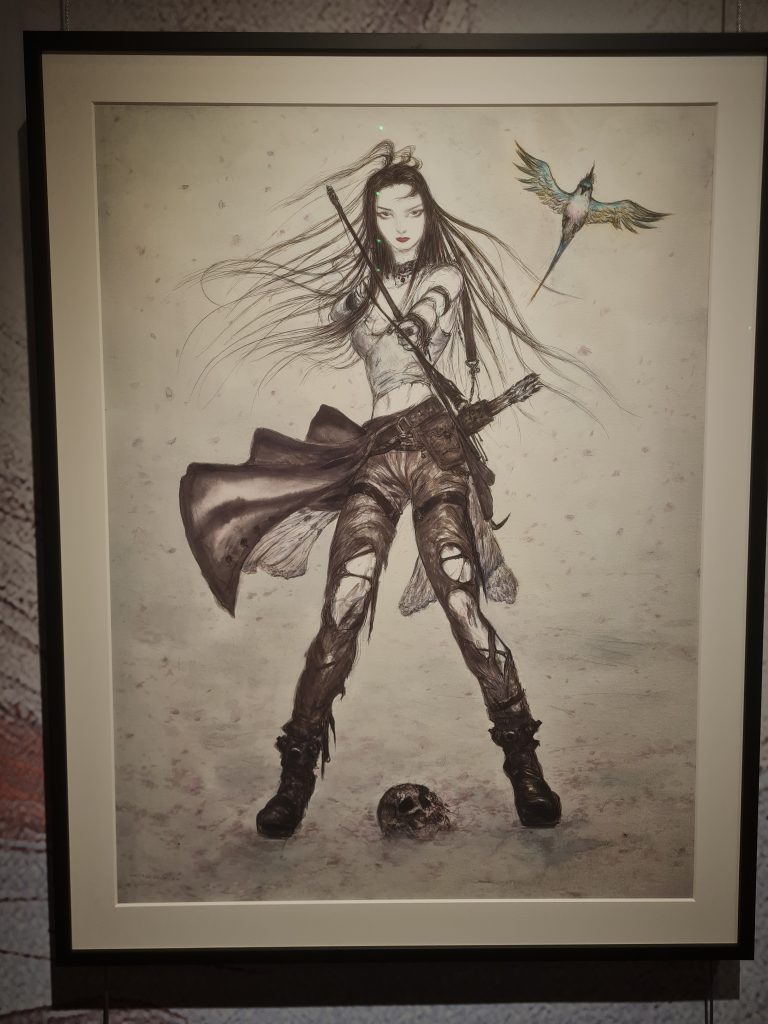
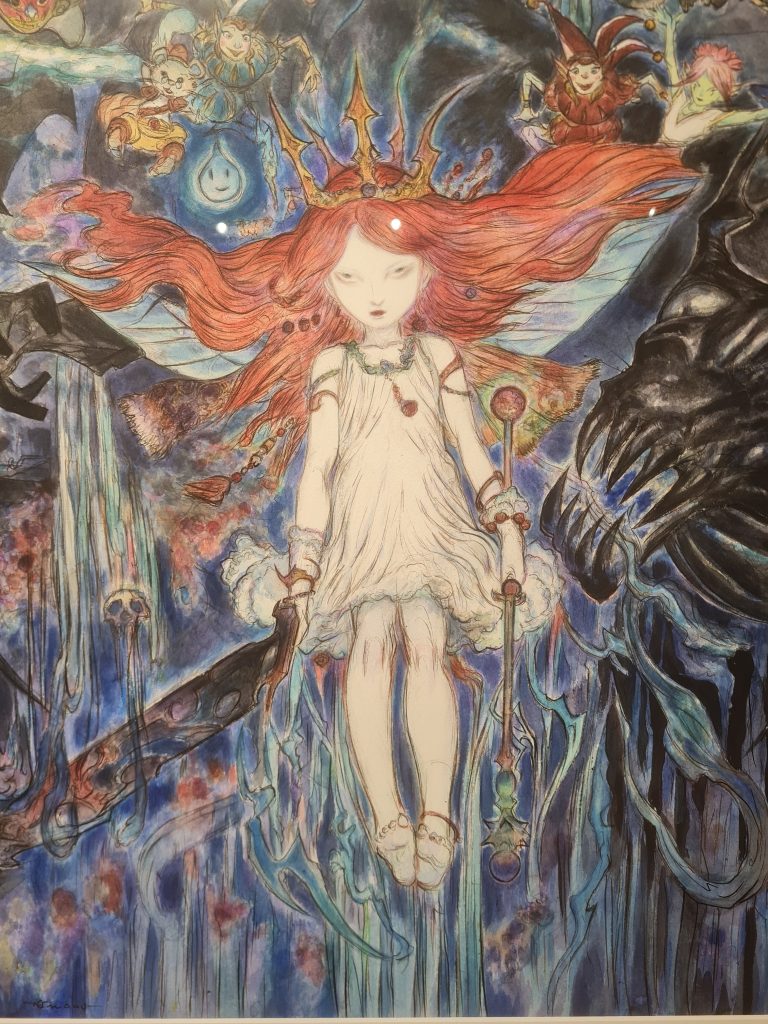
After admiring the cheerful atmosphere of the Candy Girl room, I made my way into the biggest section of the exhibition, aptly named “Game Master.” Not only was this section the one I was most interested in, but it was also the most packed one, full of people and conversations crowding the space around video game cases and prints. It was awe-inspiring to cross the doorway and see Amano’s incredibly detailed interpretation of Aurora from Ubisoft’s Child of Light and the iconic Lara Croft, both staring straight at the observer as if inviting them to witness their journey.
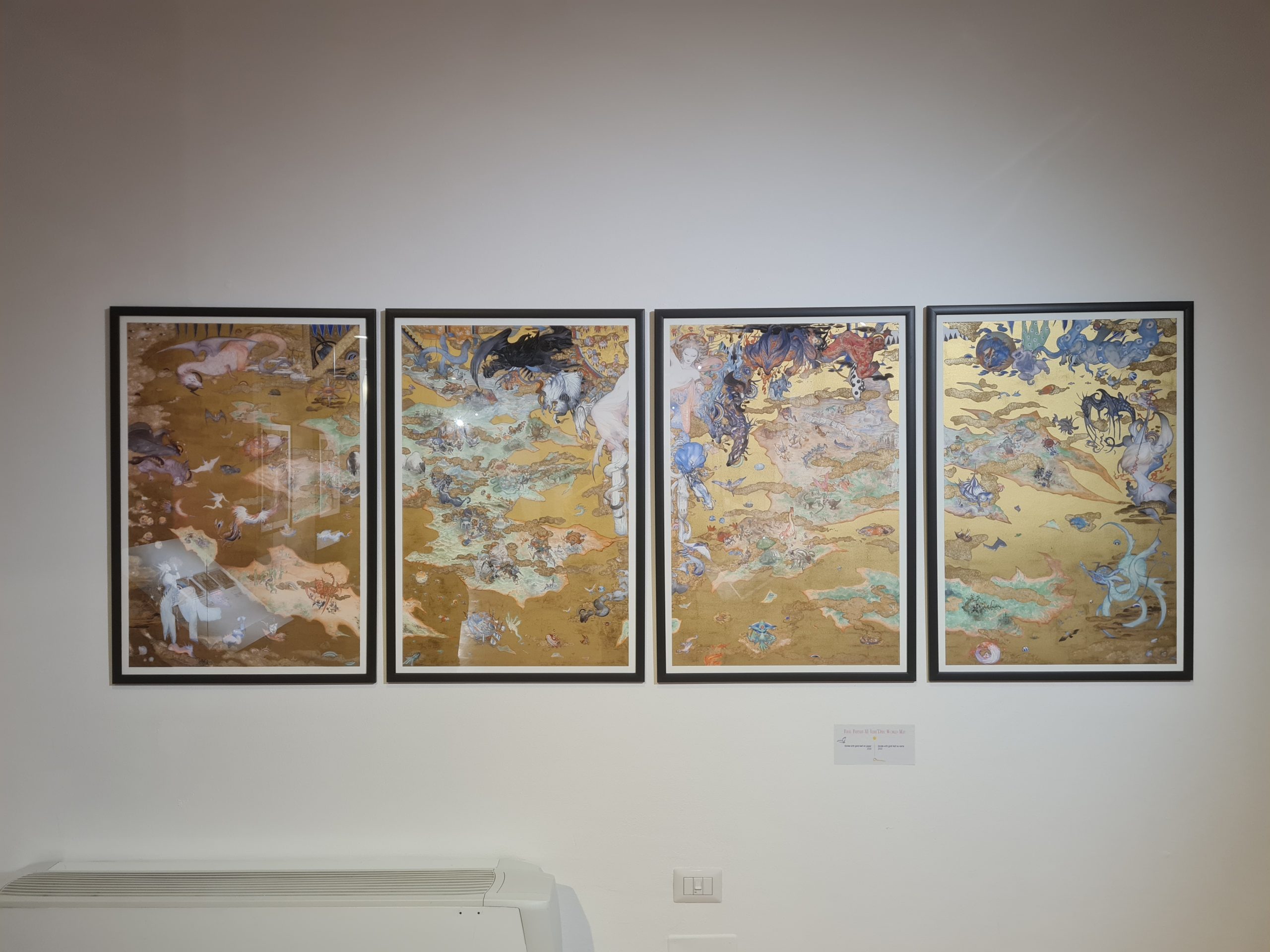
However, what really caught my attention here was the four-paneled, golden map of Vana’diel, the world from the PS2-era MMORPG Final Fantasy XI. I just wanted to sit there and stare at it to catch all the amazing creatures floating around in the world map.
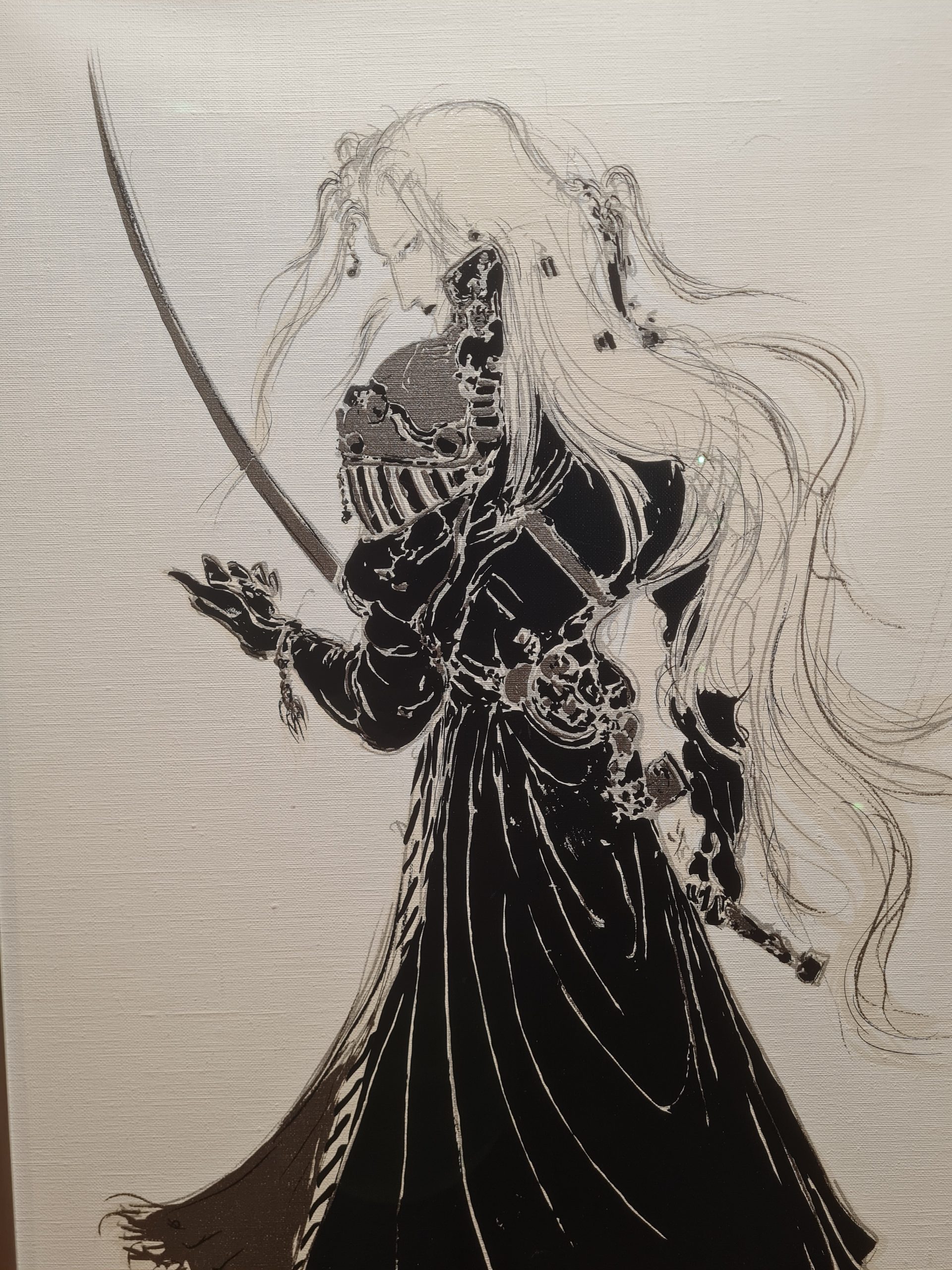
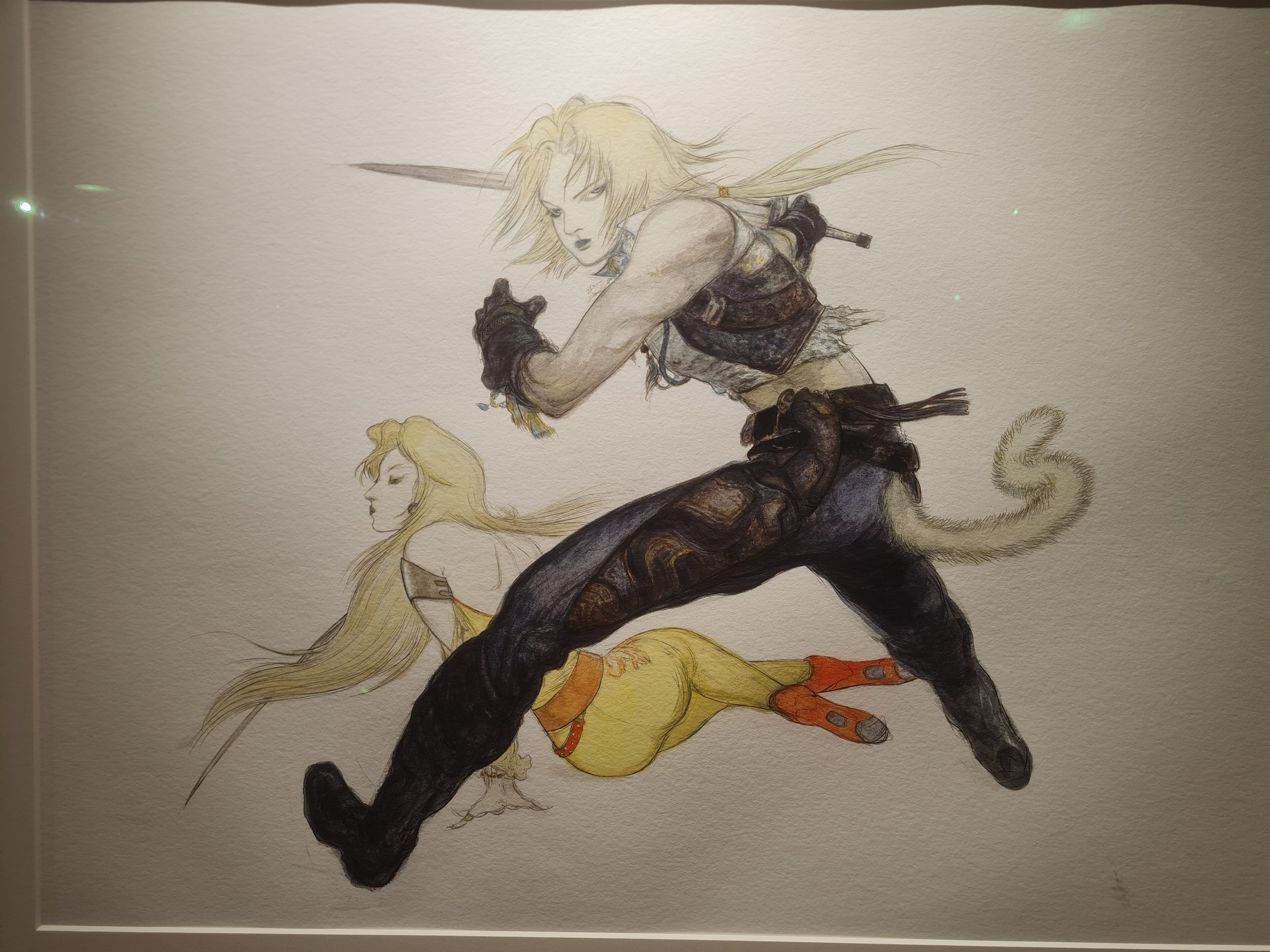
It was impossible not to pause in front of every Final Fantasy piece, seeing the stunning reproductions of familiar artworks like the popular Sharpen, depicting Sephiroth with his Masamune Blade unsheathed, or Zidane & Dagger, who look ready to start their grand adventure.
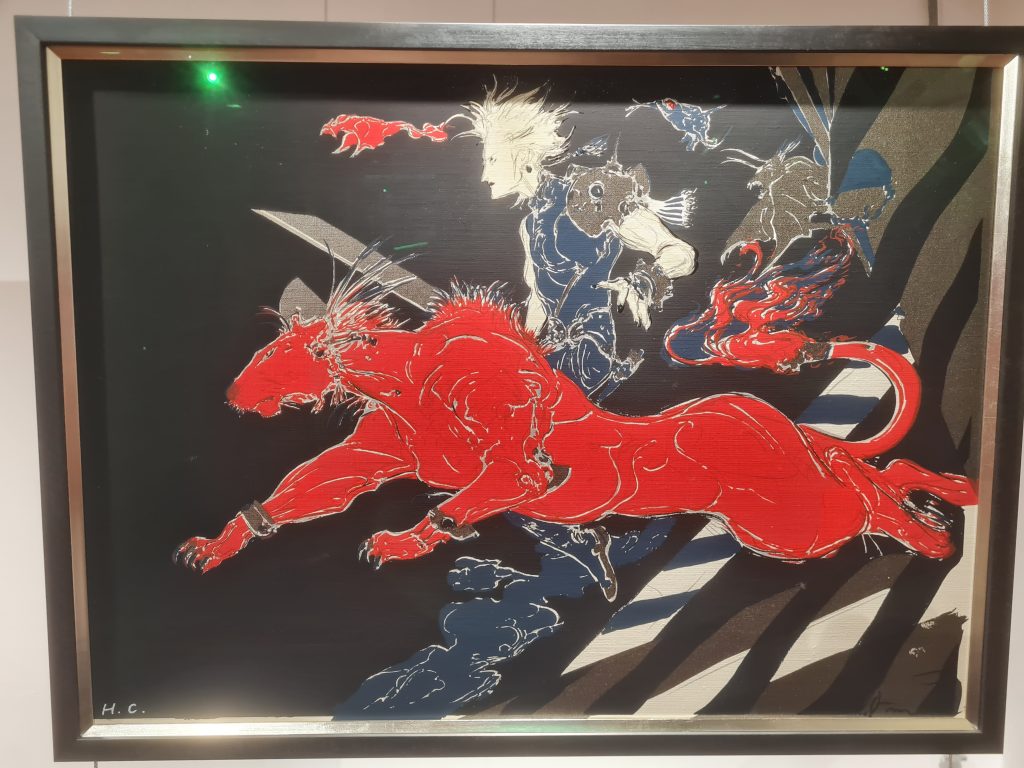
Personally, I also really loved the strong color contrast in Twinkle, in which a crimson Red XIII in the foreground and the white negative space used for Cloud’s face and arms in the middleground look striking against the black and silver background.
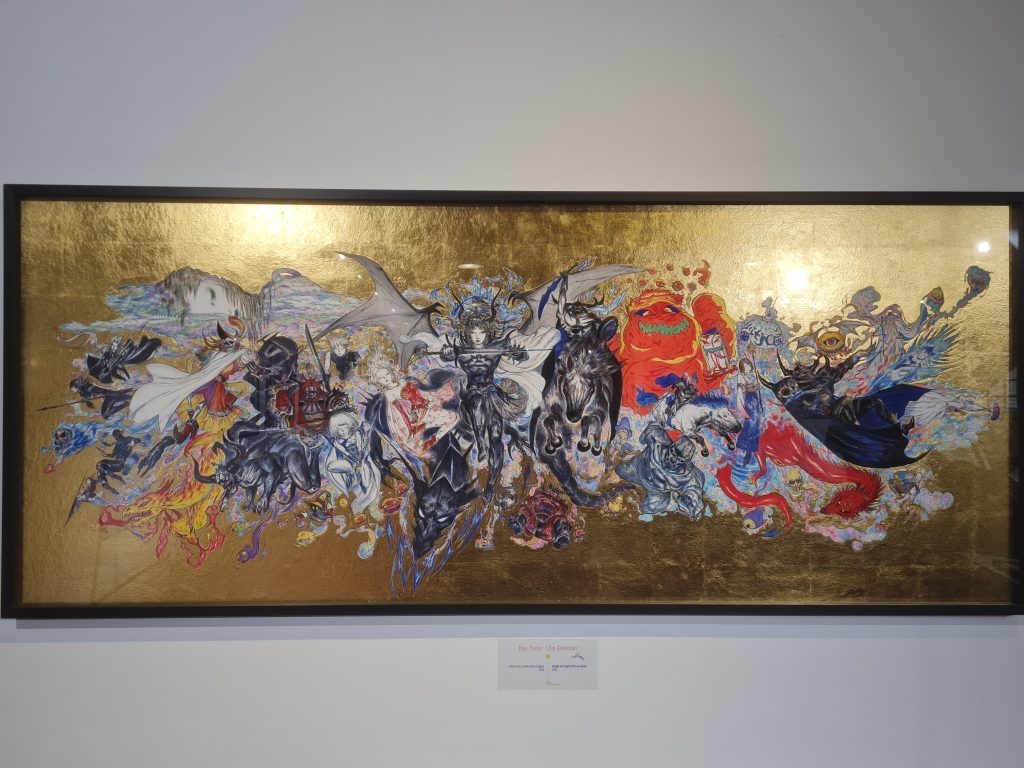
As if to bracket this corridor between two golden hands, the Final Fantasy 35th Anniversary artwork hangs on the opposite wall of the Vanadiel map, showing the Warrior of Light leading beloved and loathed characters jumping out of the golden-leafed background.
To finish up the gaming art section, the curators of the exhibition displayed key art and cases from each mainline Final Fantasy game along both sides of the corridor leading back to the staircases. While the numerical order of the games was respected, it was presented in an alternating pattern, forcing visitors to traverse back and forth from one wall to the other. This issue along with some errant lights shining on many framed pieces were the only things I found lacking in the experience, and they were not bothersome enough to diminish my overall enjoyment. They also did not seem to bother the charming young parents right behind me, as the dad lifted their baby up to show him everything, explaining to him in detail what he was looking at and why his mom and dad loved it so much.
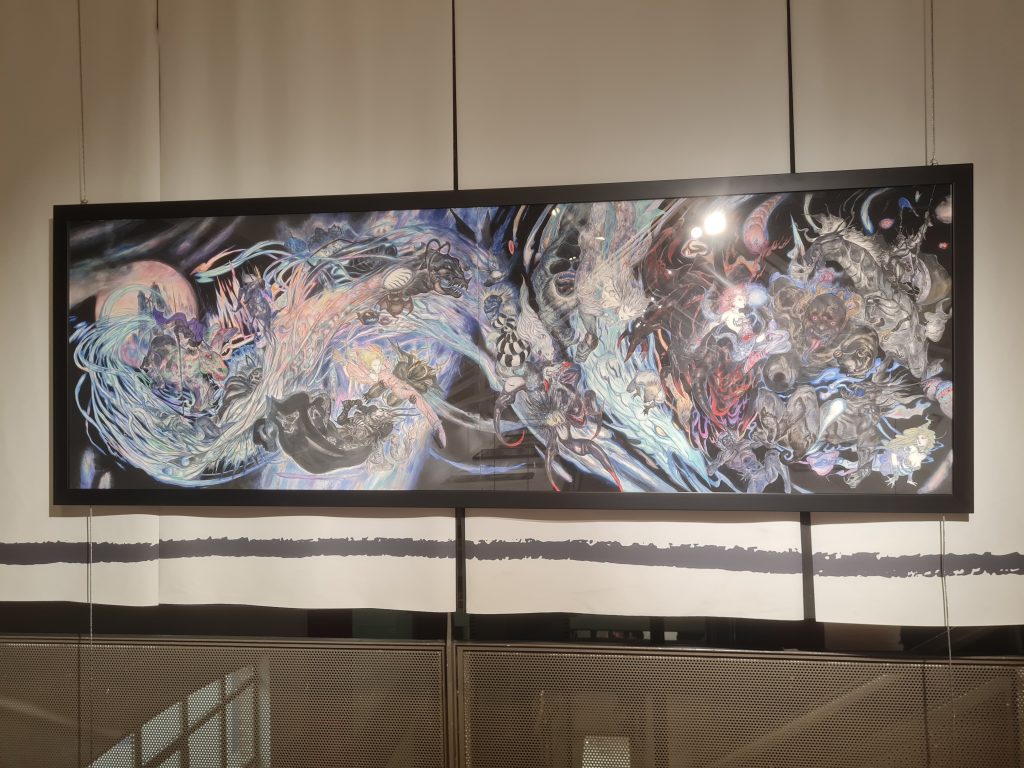
After taking in this sweet scene and all the excitement in the air, and stopping briefly to admire Big Bang, a Final Fantasy XV piece celebrating the birth of the universe (and made into an intriguing 3D animation by Square Enix!), I finally made my way back downstairs.
Yoshitaka Amano’s Design Inspiration in The Fine Arts: Global Recognition
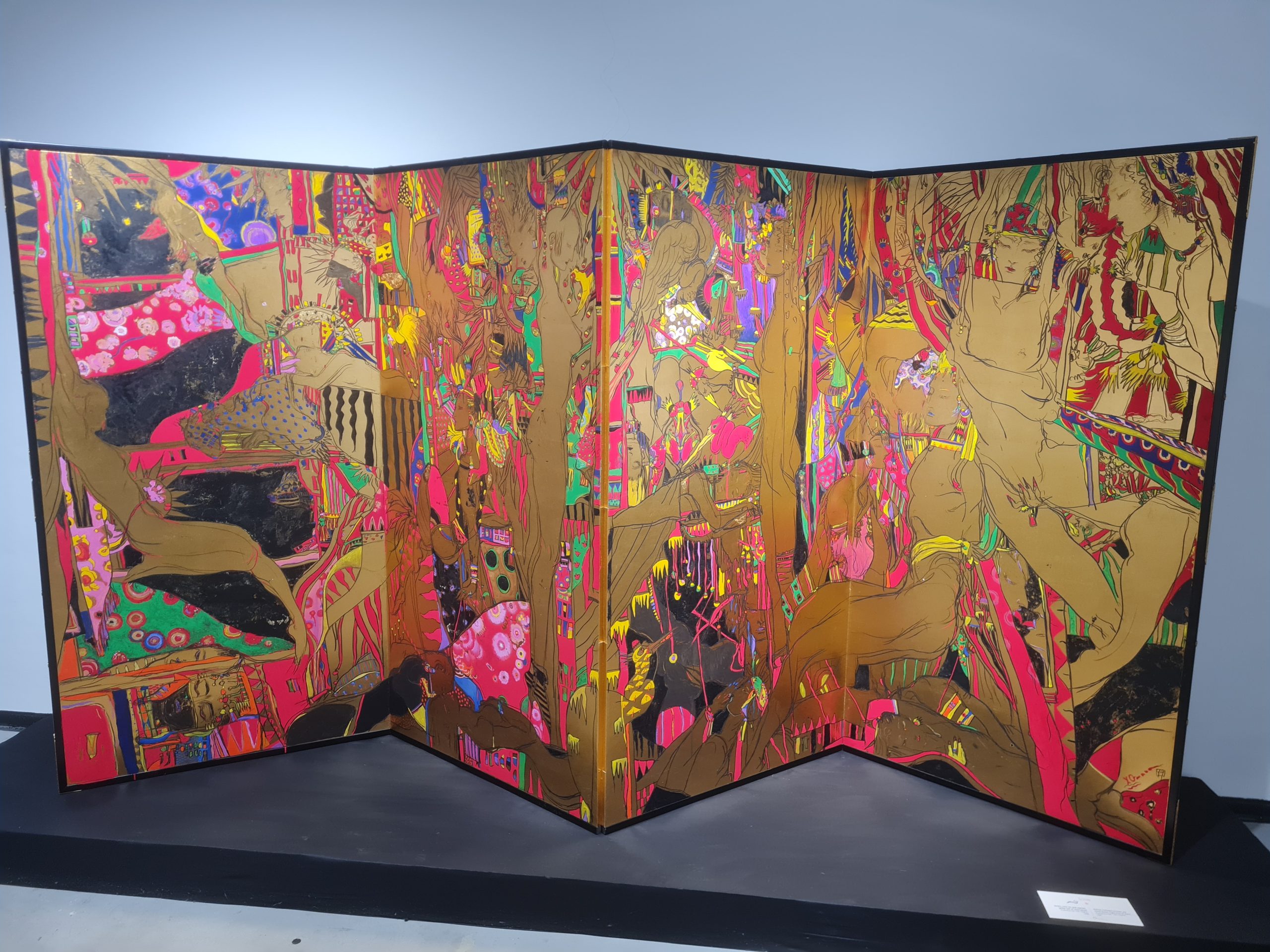
The last section of the exhibition, “Free Spirit,” hosts all the works that earned Amano his reputation as a globally recognized fine artist, and fully displays his talent, richness of expression, and his sources of inspiration. It is impossible to miss the similarities between Lovers, an incredible combination of golden leaf and neon acrylic paint on a wooden screen, and Gustav Klimt’s renowned The Kiss.
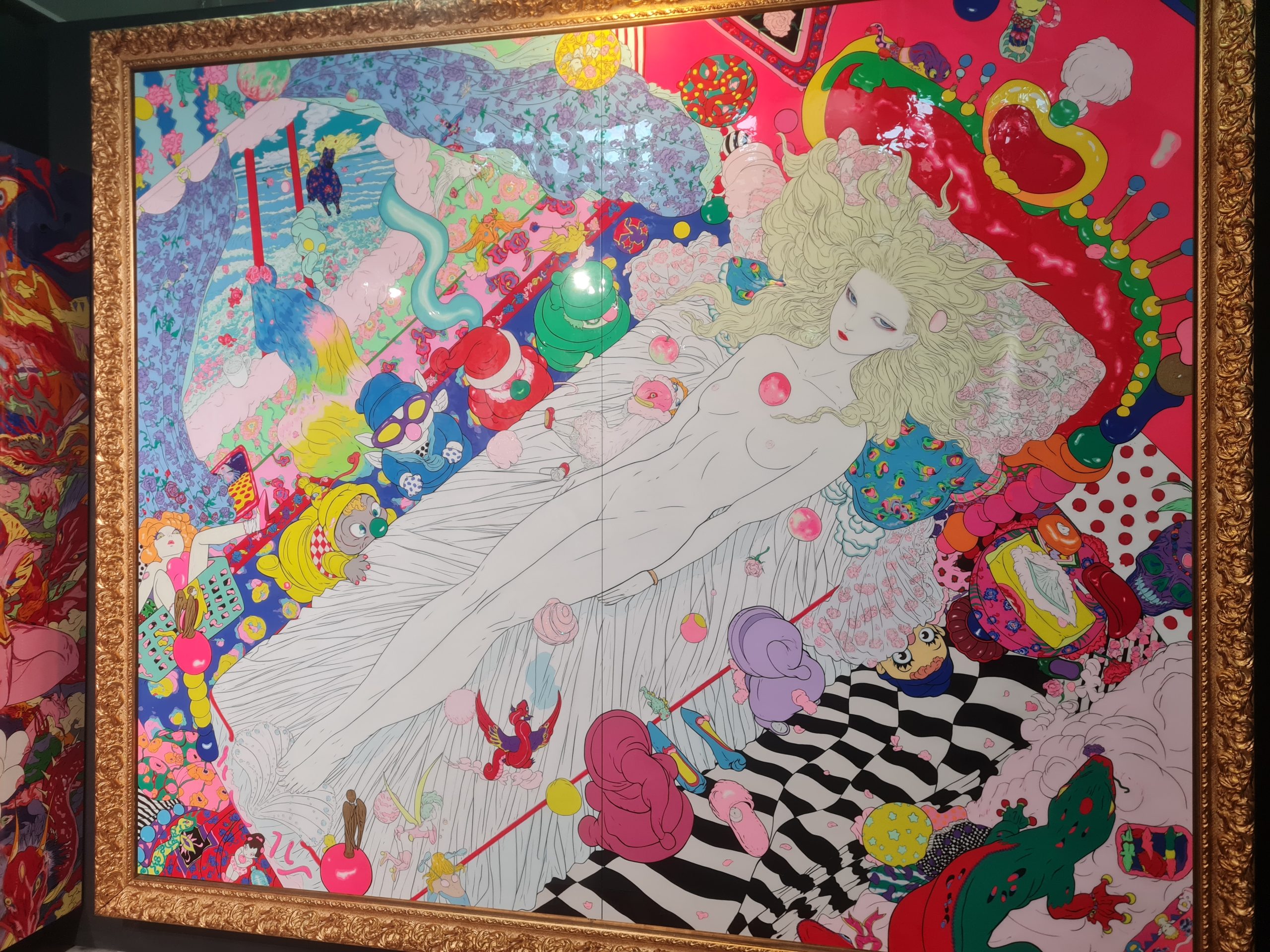
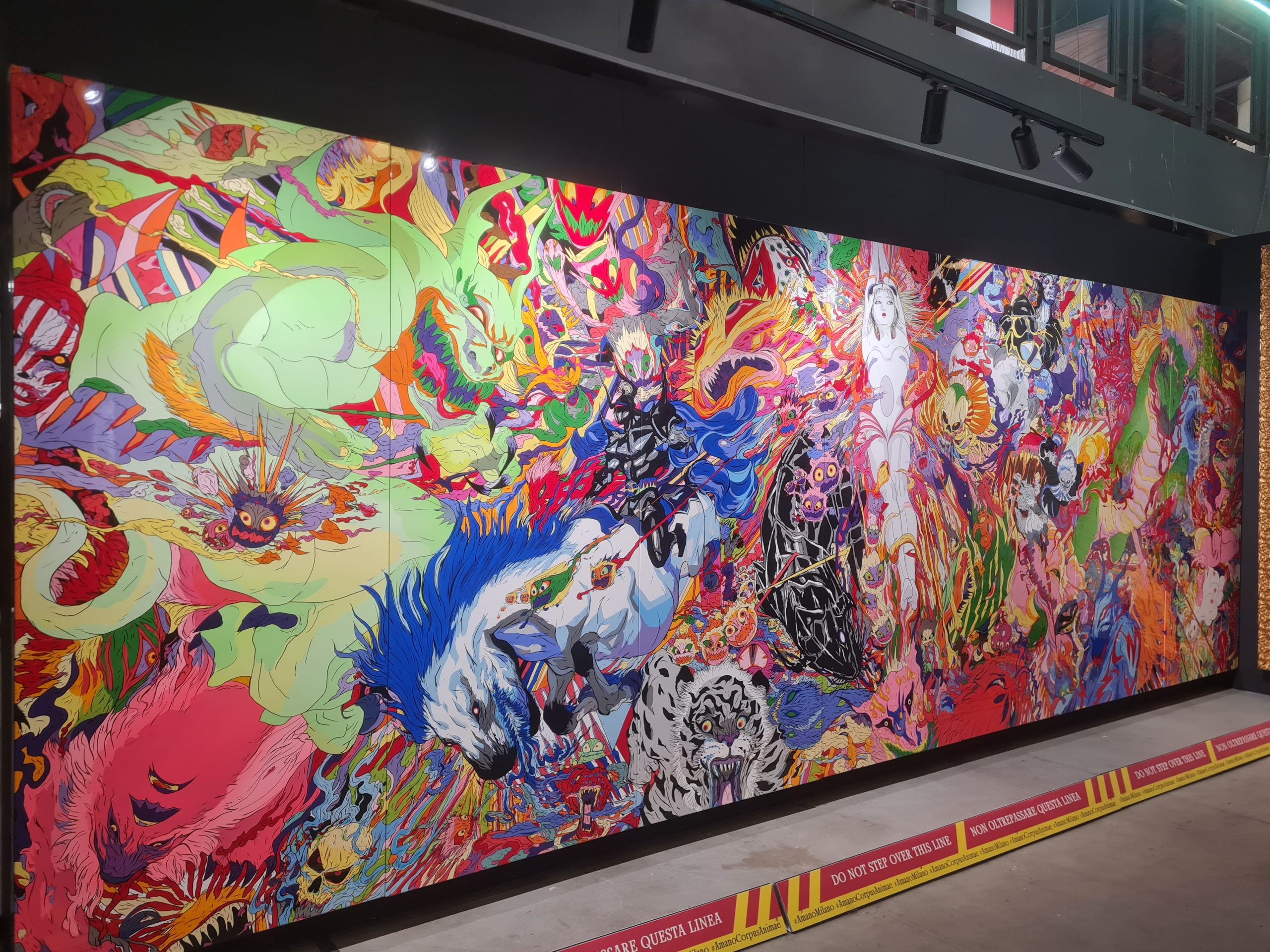
Deva Loka, his interpretation of the Buddhist and Induist dwelling place of divinities, and Spring Awakening, a modern twist on a sultry Snow White, immediately bring to mind both pop art and street art, thanks to the brightly colored car paint and the iconic images making up their appearance.
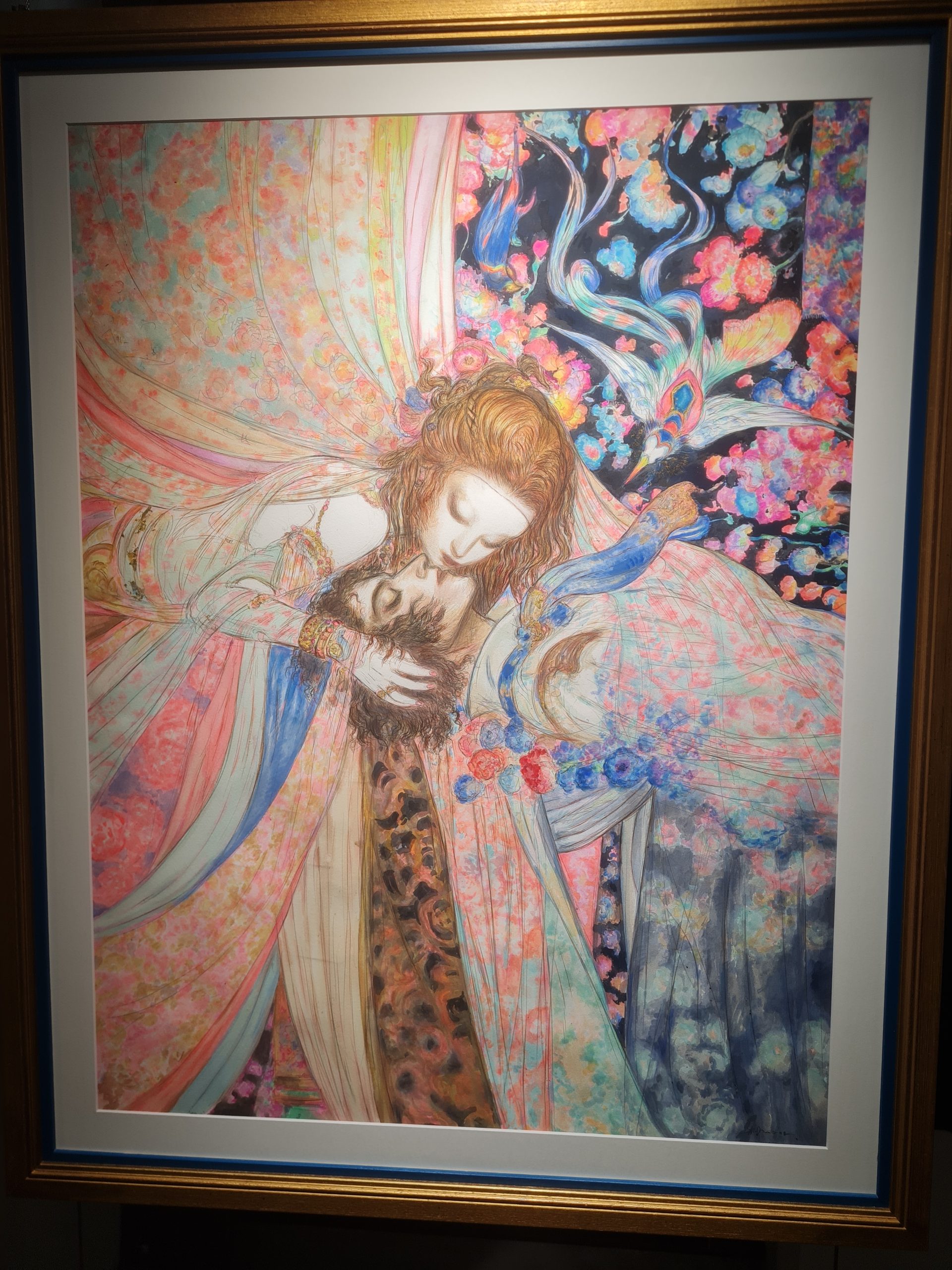
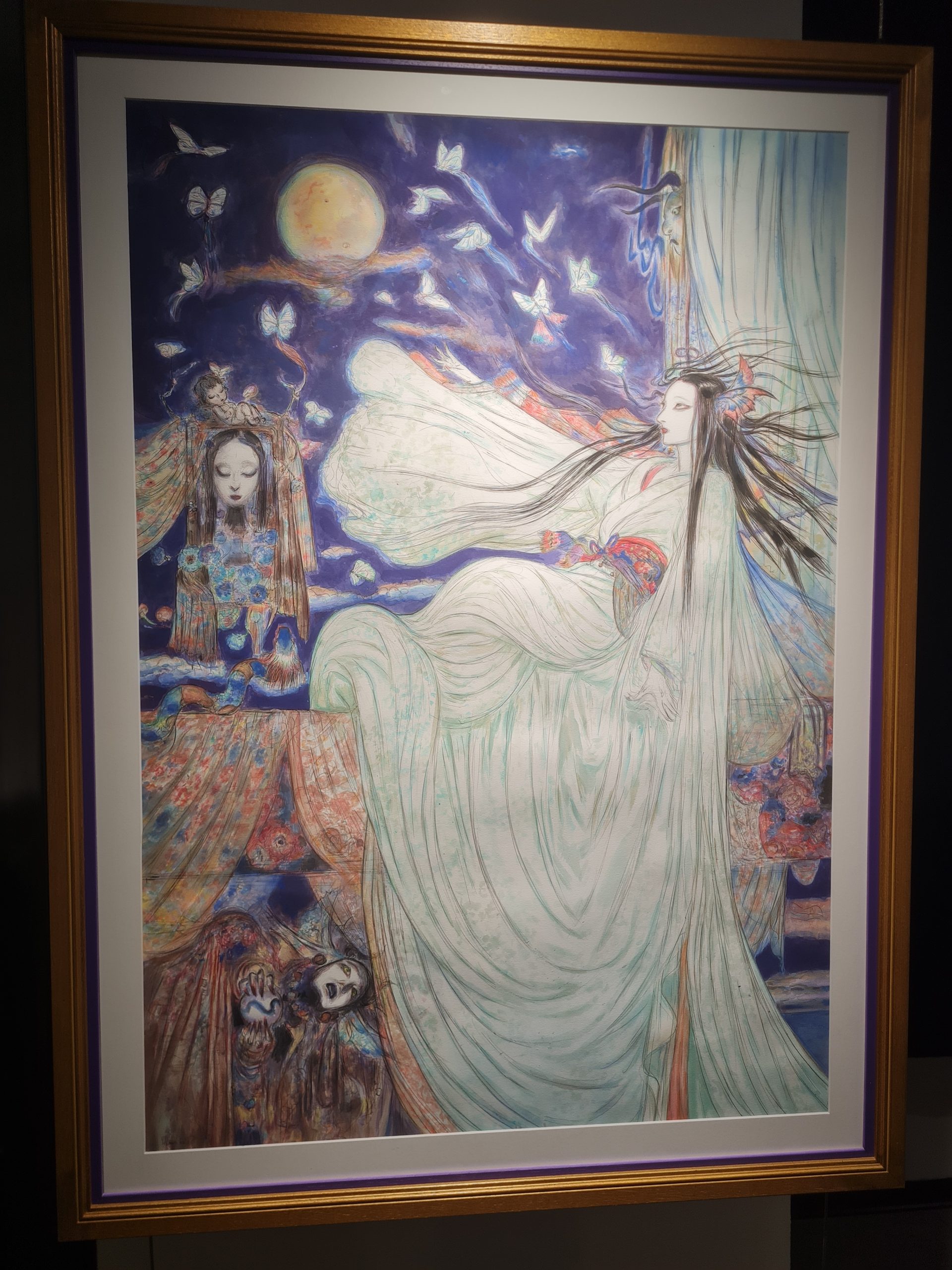
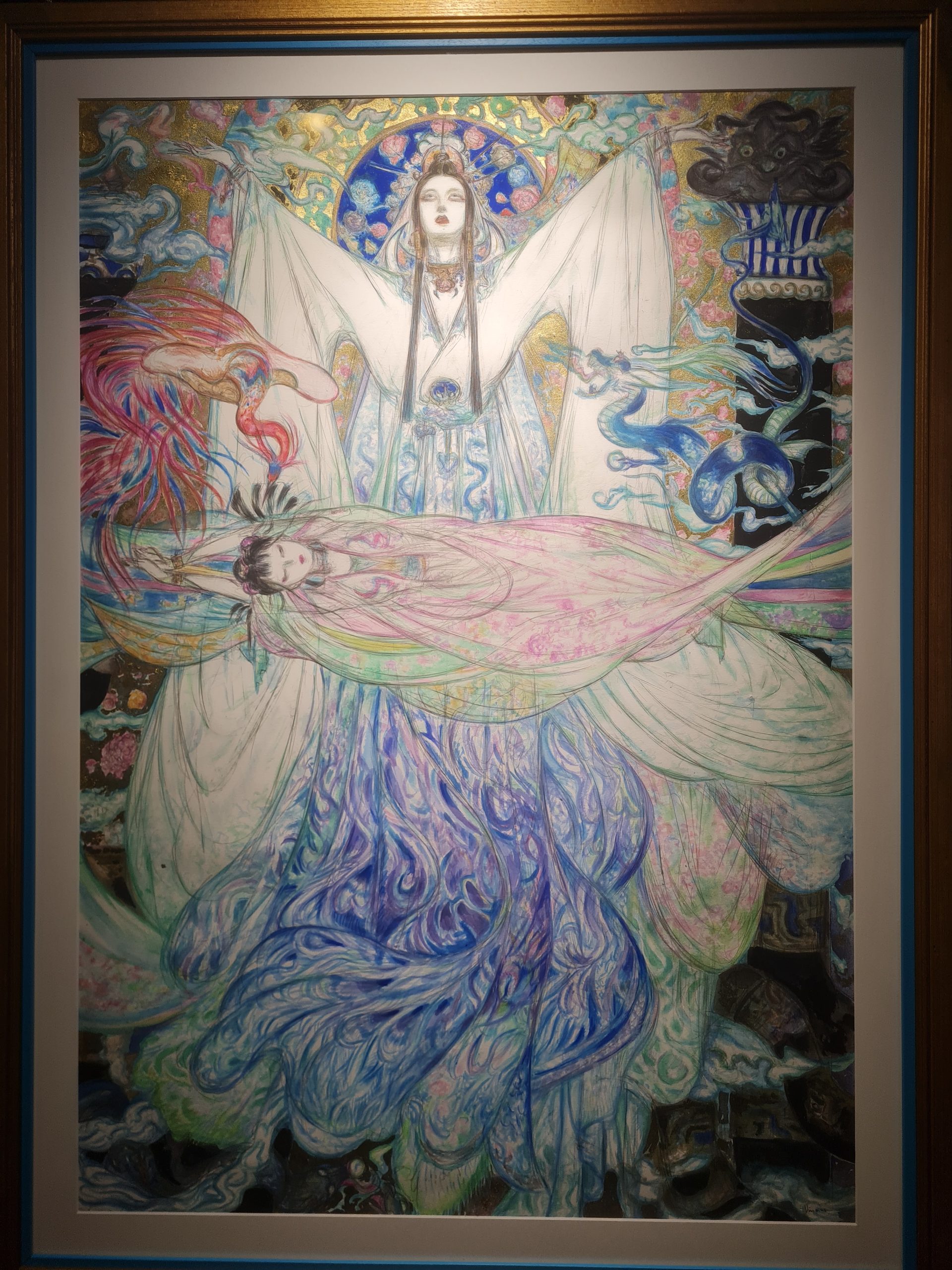
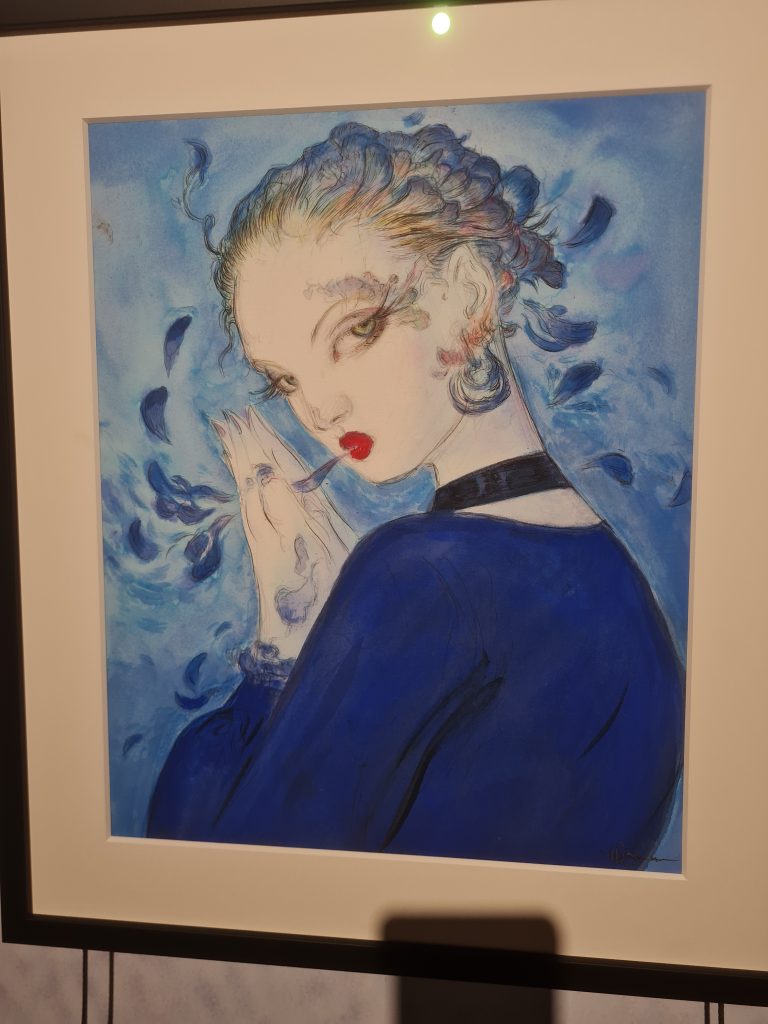
Finally, at the end of the exhibition I saw the special pieces created for “The Butterfly Effect,” the 2024 edition of Lucca Comics & Games, the most important Italian convention for the game and comics industries in Italy. The name is both a dedication to the famous chaos effect theory of the same name and a celebration of Italian opera composer Giacomo Puccini’s centenary. For the occasion, Amano created an art piece “in three acts” 一 “Ouverture,” “Crescendo,” and “Finale Fantastico” 一 dedicated to three of Puccini’s most famous opera pieces: Madame Butterfly, Tosca, and Turandot.
I had seen the pieces on posters for the convention and for the exhibition, but seeing them in person was definitely a very different experience. For this trio the artist chose vivid, airy colors that contrast neatly with the darker elements, such as hair or background, dramatizing both the female figures’ presentations and the opera pieces to which the artworks are dedicated. Aided by the spotlights used to frame the pieces, their expressions and poses looked so strong and so passionate that I could not help but feel enraptured by their presence. It was only with some difficulty that I managed to walk away.


Let’s Co-Op on Something Epic
We’re all about creative combos and game-changing strategies. Drop us a line, and let’s craft your next victory together.